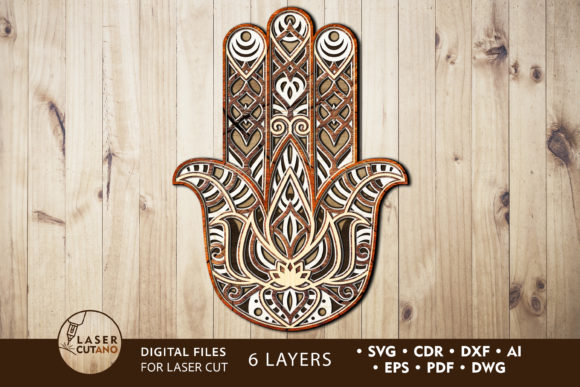
Multilayer Cut File HAMSA for Laser Cut
As a brand designer who has spent years helping local businesses build cohesive visual identities, I approach every new digital asset with a critical eye. We are not just looking at pretty shapes; we are evaluating how a graphic design asset will function in the real world of packaging design, product labels, and marketing visuals. Recently, I reviewed the Multilayer Cut File HAMSA for Laser Cut, a creative design intended for laser cutting and CNC routing. My goal was to determine if this piece could genuinely elevate a small business branding project or if it remained merely decorative clutter.
The First Impression: Mood and Brand Personality
When you first open the file, the multilayer layout immediately suggests depth and intricacy. The design carries a distinct energy that feels both protective and welcoming. In terms of brand personality, this asset leans heavily into the handmade, organic, and elegant categories. It does not scream "corporate" or "minimalist." Instead, it whispers of artisanal quality and thoughtful craftsmanship.
This makes it an ideal fit for specific niches. Imagine a boutique skincare brand using this on their soap packaging, or a local coffee roaster incorporating it into their bag accents. The mood is soft yet structured, feminine but not overly delicate. It suggests a business that cares about detail, tradition, and emotional connection. For a florist or a candle shop, this asset provides an immediate sense of warmth and authenticity that consumers respond to positively.
Real-World Application: From Packaging to Promotional Materials
The true test of any design asset is its versatility. Can it survive the transition from screen to physical product? Here is how I see the Multilayer Cut File HAMSA for Laser Cut performing across various touchpoints for a local business.
- Product Labels and Hang Tags: Because the file is prepared for laser cutting, it can be used as a die-cut element. Placing this intricate shape over a simple kraft paper hang tag instantly elevates the perceived value of the item. It creates a tactile experience that customers remember.
- Packaging Accents: For food businesses or handmade goods, this asset works beautifully as a window overlay or a box topper. It adds a layer of premium presentation without requiring complex printing processes. The negative space in the design allows background colors to show through, creating a dynamic visual hierarchy.
- Social Media Graphics: In the digital realm, this illustration serves as a powerful hero graphic. Use it in Instagram stories or Pinterest pins to announce seasonal campaigns. Its detailed lines stand out against clean backgrounds, drawing the eye immediately.
- Printable Inserts and Thank-You Cards: A small business’s unboxing experience is crucial. Including a thank-you card featuring this cut file reinforces the handmade ethos. It signals to the customer that the brand has invested time and care into every aspect of the purchase.
Supporting Business Presentation and Trust
Consistent use of high-quality design assets like this one builds stronger first impressions. When a customer sees a product label with precise cuts and thoughtful layout, they subconsciously associate that precision with product quality. This asset supports better product recognition by providing a unique visual anchor. It helps establish a clearer visual hierarchy, guiding the customer’s eye to the most important information while adding decorative flair around the edges.
Furthermore, it improves customer trust. In a market flooded with generic clipart, a custom-looking multilayer design feels intentional. It suggests a professional branding strategy rather than a rushed assembly. For local businesses competing with larger chains, this level of polish is essential for standing out on the shelf.
Strategic Placement: Where It Works Best
To maximize impact, you must place this asset where it enhances rather than distracts. It works best as a decorative brand element on larger surfaces. Think of it as a frame for your content, not the content itself. It is perfect for promotional banners where the text is minimal, or for product mockups where you want to showcase texture and material.
Consider using it in editorial design contexts, such as lookbooks or brand catalogs. It also shines in web design when used as a subtle background pattern or a section divider. The key is to let it breathe. Give it white space so its intricate details can be appreciated.
Cautions: Where to Use It Carefully
Not every business needs this asset, and some applications require caution. Avoid using this for formal corporate branding where sleekness and simplicity are paramount. If you are designing for a law firm or a tech startup, this ornate style may feel out of place.
Be careful with very small labels. The fine details of a laser cut file can get lost if scaled down too much, resulting in a muddy print. Similarly, avoid placing it on crowded product packaging where ingredient lists and legal information already dominate the layout. It should never compete with critical text. Also, consider contrast carefully; on low-contrast backgrounds, the layers may disappear, ruining the visual effect.
Practical Designer Notes for Implementation
Before integrating the Multilayer Cut File HAMSA for Laser Cut into your workflow, follow these practical steps to ensure professional results:
- Test on Mockups: Always preview the design on real packaging mockups. Digital screens lie about scale and texture. Seeing it on a cardboard box or glass jar reveals potential issues.
- Check Black and White Usage: Convert the design to grayscale to ensure the layers still have distinction without color. This checks the strength of the visual hierarchy.
- Font Pairing: Test the asset alongside different font styles. It pairs well with serif fonts for a classic look, sans serif fonts for modern contrast, and script fonts for elegance. Avoid handwritten fonts that might clash with the geometric precision of the cut file.
- File Inspection: Inspect the SVG or vector editability. Ensure you can adjust stroke weights and layer separations for your specific laser cutter or printer. Check PNG transparency if you are using it digitally.
- Licensing Verification: Confirm commercial licensing before using it for client work or physical product sales. Ensure you have the right to sell products featuring this design.
Conclusion
The Multilayer Cut File HAMSA for Laser Cut is more than just a decorative illustration; it is a tool for building a memorable brand identity. By understanding its strengths and limitations, small business owners and designers can leverage this asset to create superior packaging design, engaging social media graphics, and polished marketing visuals. Whether you are launching a new line of handmade soaps or rebranding a local bakery, this design offers a sophisticated way to connect with customers on an emotional level. It bridges the gap between traditional craftsmanship and modern commercial design, making it a valuable addition to any creative entrepreneur's toolkit.